Field research that stays usable after collection.
Plan multilingual assessments, collect structured or voice responses when appropriate, and move field records into analysis with consent, language, and source context intact.
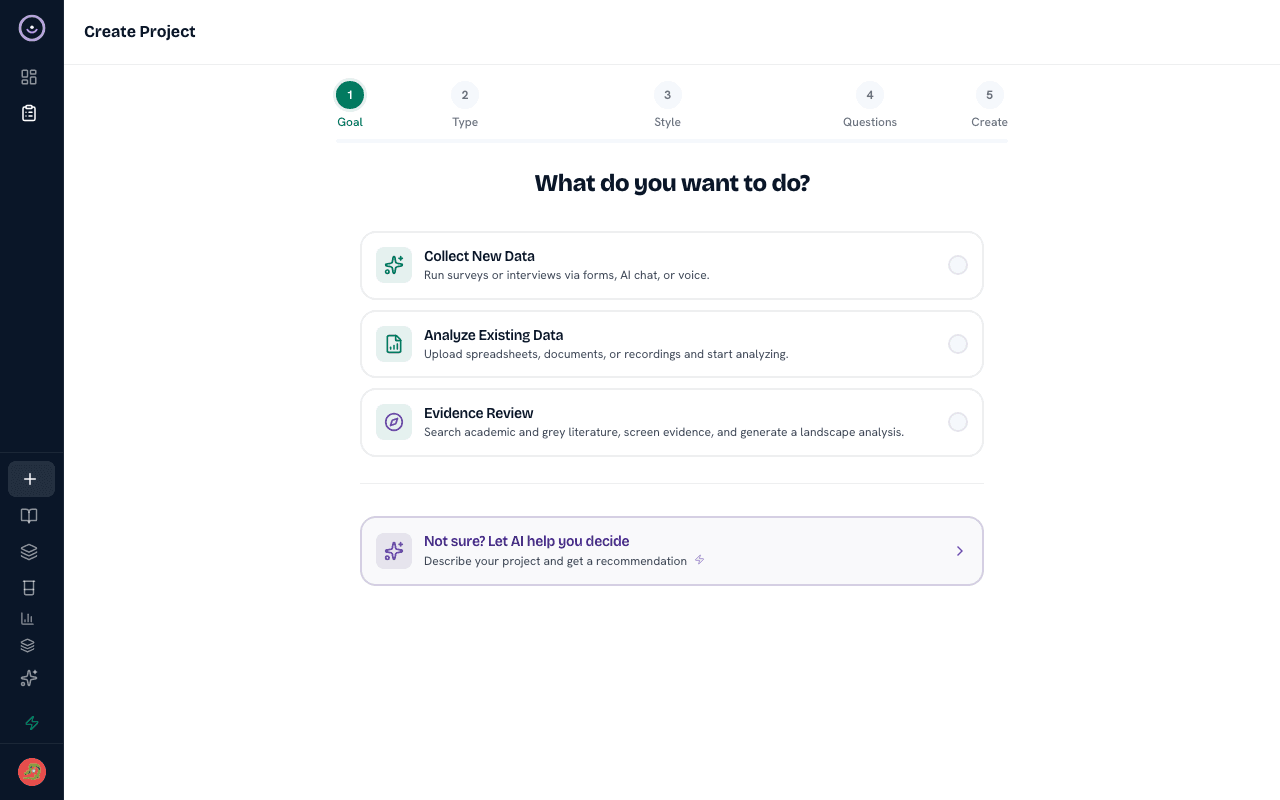
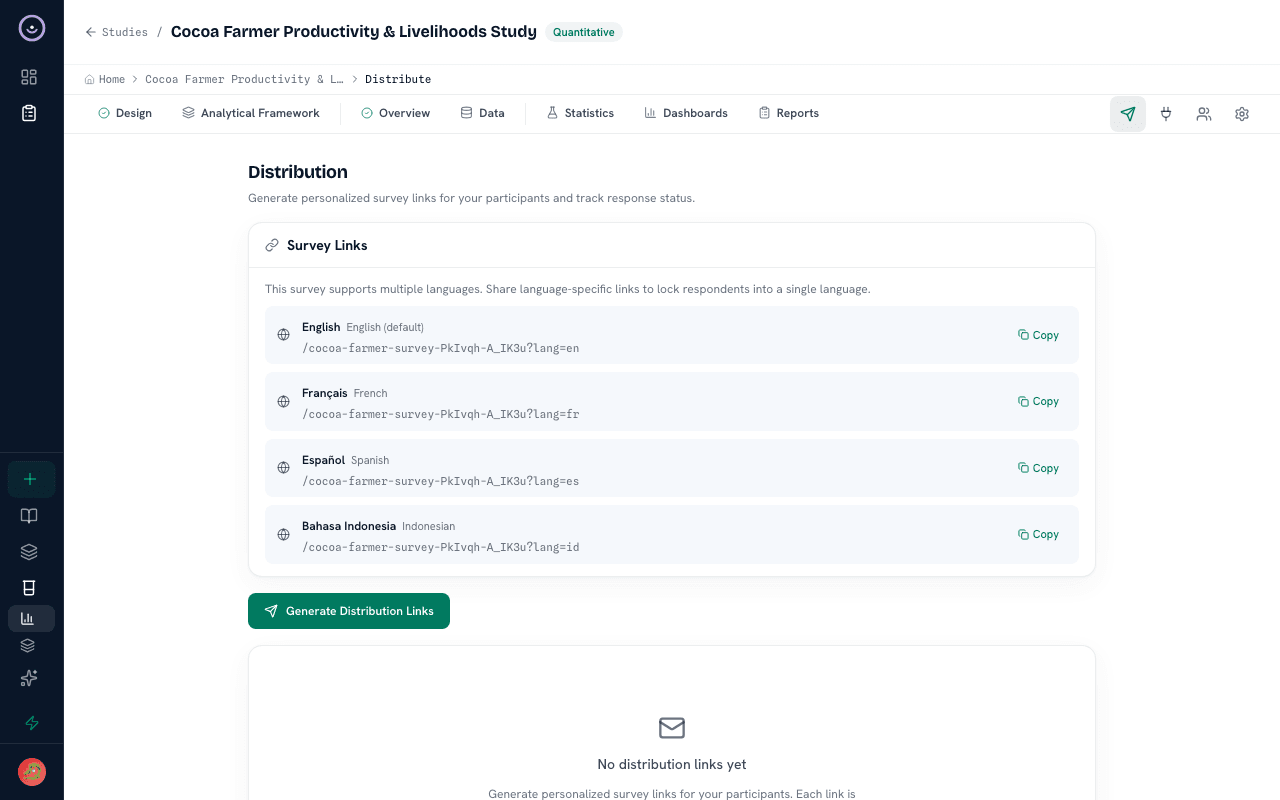
Prepare instruments, consent text, collection links, and response modes in the languages the context needs
Structured forms, chat-style flows, or voice response, whichever fits the setting
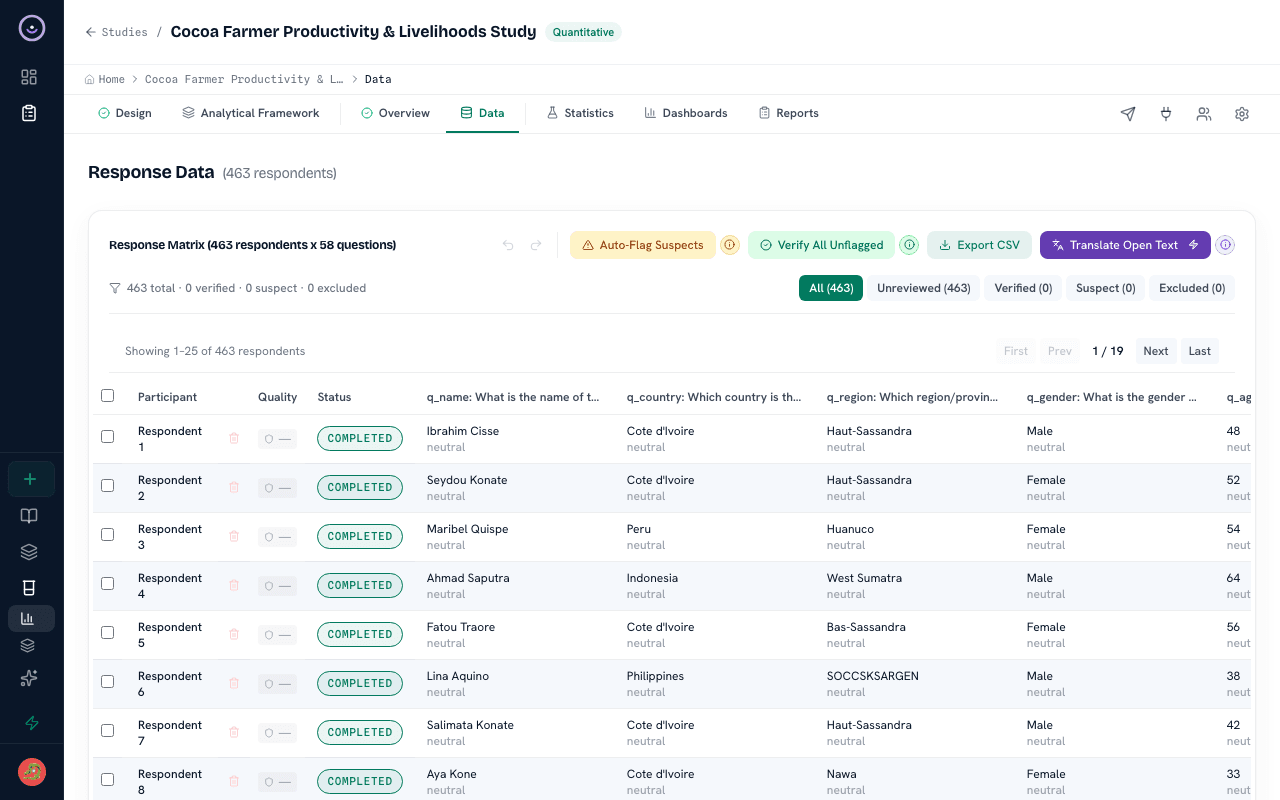
Transcripts, follow-ups, metadata, and imported field datasets stay available for analysis
How it works
From field setup to reviewable assessment
Relevant tools
Tools for multilingual field evidence
Voice Response Collection
Collect spoken responses when that fits the setting, with transcripts available for review.
View toolsAI Conversational Interviews
Use chat-style interviews with reviewable transcripts and configured follow-up prompts.
View toolsField Data Import
Bring structured field datasets into Heurista for analysis and reporting.
View importsField Collection Planning
Set up language, consent, links, and collection modes before data collection starts.
Plan collectionRapid Assessment Templates
Pre-built templates for needs assessments, PDMs, KAP surveys, and other common humanitarian instruments.
View toolsMultilingual Outputs
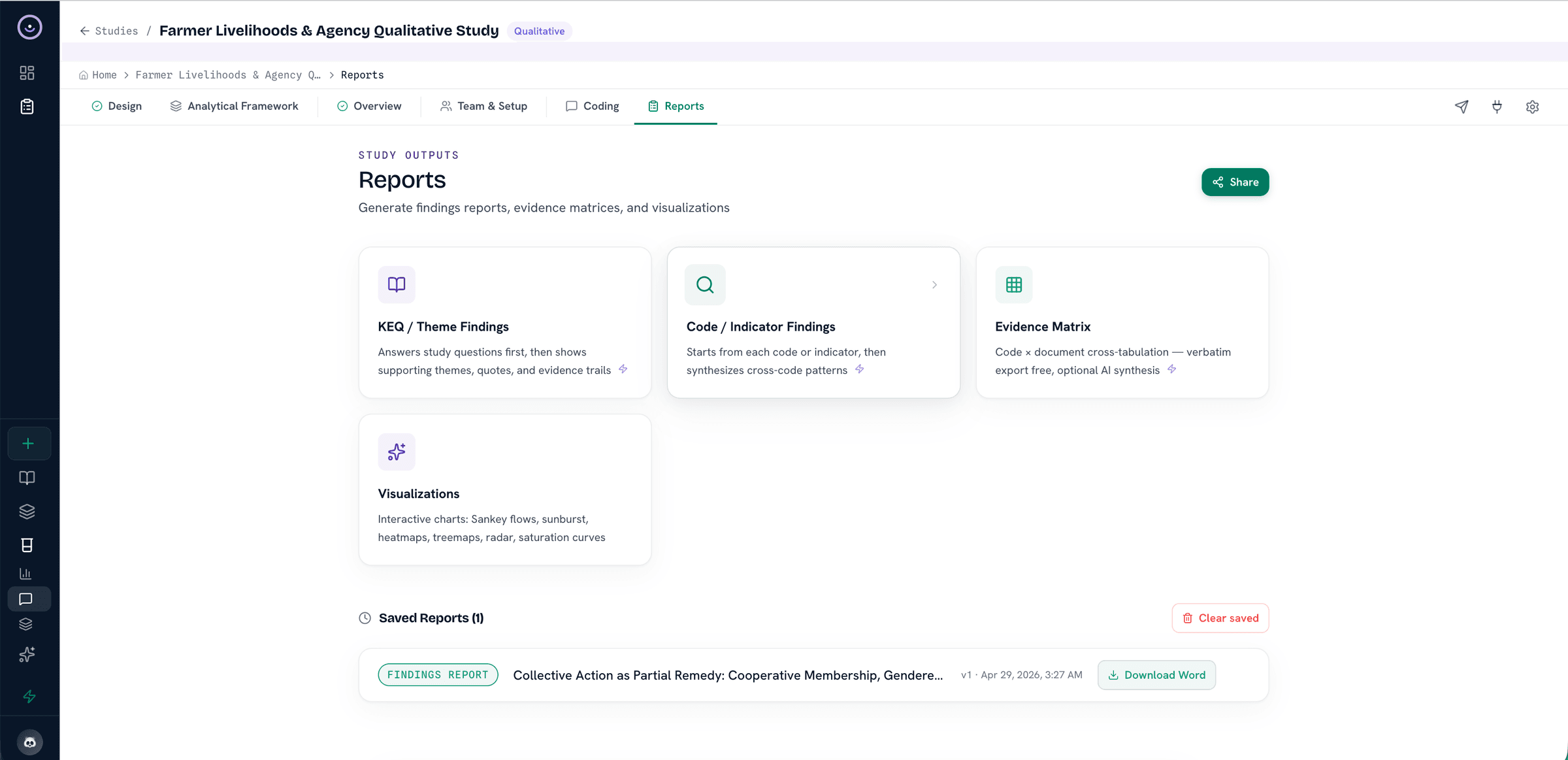
Field summaries and findings drafts that carry the original-language responses through to translation, with source citations preserved.
View toolsReviewable AI support
Where AI fits in assessment review
Heurista uses AI where it can reduce research labor, but the useful unit is still a reviewable suggestion, query answer, or draft tied back to the study record.
- 01
Voice and multilingual coding
Hue can suggest codes for interview transcripts and flag uncertain assignments. Reviewers verify before findings move forward.
- 02
Live field queries
Ask plain-language questions of incoming data. Answers map back to respondents, locations, and timestamps where those fields are available.
- 03
Field-ready summaries
Assessment briefs and rapid summaries keep source responses cited so the line from finding to evidence stays clear.
Trust
Controls for field research data
Encryption in transit
TLS encryption in transit, with clear controls for account and study access.
AI data protection
Research data is handled under commercial API terms and is not used to train public AI models.
Full audit trails
Every action logged with timestamps, user identity, and change history.
Role-based access control
Granular permissions for team members, reviewers, and external stakeholders.
Security documentation
Privacy Policy, DPA, and data subject rights documentation are available for procurement review.
Research consent support
Consent screens, participant notices, and study-level controls support responsible fieldwork.
Next step
Your next assessment starts here
Field collection, multilingual response records, and analysis workflows for rapid assessment cycles.